
Ad world’s AI opportunity: ambition.
Five weeks into this project and something is becoming clear: AI adoption is tied to AI ambition. That may be universally true, but it is for-sure true of agencies. Every agency is using AI to some degree. What they want to do with it is what sets them apart:
Replacement Agencies want to remove costs. Deliver the same thing with less overhead (usually people)
Augmentation Agencies want to give their people more tools. Deliver more with the same people.
Expansion Agencies want to use AI to do things previously unavailable, usually because of economic constraints.
No one should say “we are an AI-enabled agency” anymore. They should say what they want to do with AI. What their ambition is. That’s what this week’s top three stories are all about: how ambition is setting the framework for AI adoption and agency growth.
Let’s run this week’s stories. Again: these are sourced, sorted and scored with the help of an OpenAI/Codex research assistant, but every word you read (every breath you take…) is written by me, a real human being.

Webflow debuted a platform that (they say) lets marketing teams “launch, optimize, and scale digital experiences together” Emphasis on “together” is mine, since it shows this company leaning heavily into the Augmentation space. The platform seems to be built specifically with the understanding that humans and AI collaborate. CEO Matt explains the evolution best: “clients used to ask us about AI for one reason: speed. Now they expect it to…make them better marketers”.
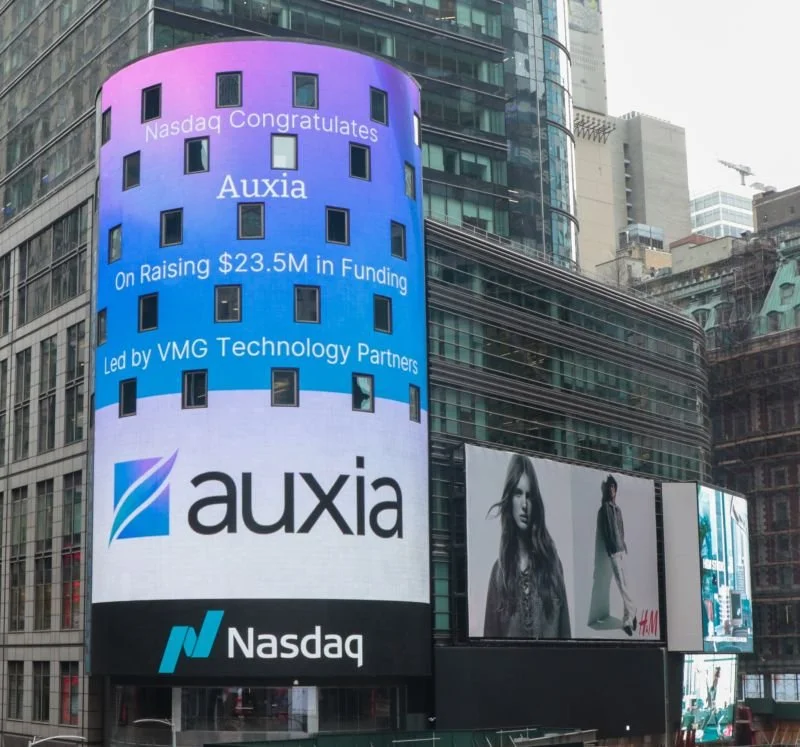
Auxia is rolling out something close to a learning system, where AI not only helps people build and run marketing campaign workflows, but also run experiments. They promise you get to approve every step, but those steps seem to be getting faster and more complex.
Specifically (and what gets us into Expansion territory) is the notion of COMPOUNDED KNOWLEDGE. All actions and results are fed back into the system creating an institutional memory that promises to pick up the pace of development.

Columbia is issuing a clear warning to the Replacement agencies, excited about cranking out more ads with AI. They did a massive study and found that AI ads could generate clicks, but ONLY if the ads didn’t look like AI. Consumers are getting increasingly savvy about creative (or at least skeptical). This is a clear example of how AI generated creative ends up taxing your results.
Mover of the Week: Ambition.
Let’s talk about Ambition. It is more than drive. Ambition is drive towards a goal. More specifically a goal that you highly value. For agencies and marketers whose sole ambition is to lower costs (the Replacements. Not the New Wave band), there are a lot of options. But that may be a losing game to play. Lowered production costs generate more output, most of which has an AI-ness to it, driving down clicks.
The agencies that have higher ambitions are better set to win the long game.
Once again…let’s do the numbers.
Thursdai index: this week’s numbers.
Experimentation Capability: 8.3
Learning Quality: 8.7
Laboratory Reliability: 8.3
Market Traction: 6.3
We’ve de-hyped this week. Biggest drop (of everything dropping) is Market Traction. That’s due to the Columbia study. They pointed to a significant danger that should cause every marketer using a “create a 1000 ads” platform to pause.
The Thursdai Index and report is the work of 61 Hawk founder Gary Stein with assistance from an OpenAI research agent. The agent sources, sorts and scores news stories. Everything you read was written by Gary, a real human being.
